 EN
EN


Compact Mini Excavator for Sale Selection Checklist: Zero-Tail Swing + Boom Swing Specs to Avoid Rework from Mismatched Parameters
Are you still selecting a mini excavator based on engine horsepower and bucket capacity alone? If so, you may be overlooking two specification categories that directly determine whether the machine can actually complete your job without repeated repositioning — and without triggering costly rework cycles. Zero-tail swing radius and boom swing angle range are the two most commonly mismatched parameters in compact excavator procurement, yet they rarely appear in shortlist scorecards. This checklist walks you through both, step by step, before you finalize any purchase decision.
As a construction machinery engineering consultant with hands-on experience across earthmoving, pipeline trenching, and urban foundation work, I've evaluated mini excavator deployments for project types ranging from single-lane utility repair to multi-phase infrastructure builds. What I consistently observe is that buyers who skip the tail swing and boom swing verification steps end up with a mini excavator that technically meets spec on paper but operationally creates bottlenecks on site. The mini excavator selection process must include both ZTS and boom swing verification; skipping either step puts the entire procurement decision at risk.
Why Zero-Tail Swing and Boom Swing Matter More Than You Think
Think of the mini excavator's tail swing radius like the turning radius of a delivery truck in an underground parking lot — just because the truck fits through the entrance doesn't mean it can maneuver between the pillars. A mini excavator that cannot complete a full 360° slew in your available workspace will force the operator to reposition after every few bucket cycles. On urban utility projects where trench sections are short and obstacles are everywhere, that extra repositioning time compounds quickly. Every mini excavator buyer working in confined spaces needs to treat ZTS as a non-negotiable filter, not an optional feature comparison point.
Boom swing — also called upper arm lateral swing — is a separate, complementary parameter. It allows the digging arm to swing left or right from the carrier centerline while the tracks remain stationary. This is what lets a mini excavator dig alongside a wall, a foundation edge, or a property boundary without physically moving the machine body. When buyers overlook the boom swing angle range during mini excavator selection, they typically discover the gap during the first trench run, when the bucket hits the wall at 60% of the swing range and the operator has to reset the machine position every meter.
Selecting a mini excavator for sale without verifying these two parameters against your actual site constraints is the most reliable path to parameter mismatch. And parameter mismatch drives rework.
Step 1: Define Your Site Clearance Envelope Before Opening a Spec Sheet
The most common mistake in mini excavator procurement is opening a product catalog before understanding the physical constraints of the work site. Every mini excavator evaluation must begin with the job site, not the spec sheet. Before comparing any mini excavator models, document three physical measurements from your job site:
- Available slew diameter: The maximum circular space available for the machine to rotate 360°. Measure from the tightest constraint — a wall corner, a fence line, a parked vehicle lane. Express as a diameter in millimeters.
- Working wall clearance: The distance between the nearest trench wall, foundation edge, or structural obstacle and the machine's track edge. This is the parameter that boom swing must clear.
- Passage width: The narrowest point the machine must transit to reach the work zone. This affects machine transport width, not just swing radius. The two are frequently confused in RFQ documents.
These three numbers form your mini excavator site clearance envelope. Every mini excavator model you evaluate must clear all three before any other specification comparison begins. Skipping this step and comparing mini excavator options on digging depth or engine power alone is technically evaluating the wrong variable for your application.
Step 2: Understand Zero-Tail Swing — What the Spec Actually Means
Zero-tail swing (ZTS) means the counterweight and rear body of the mini excavator stay within the width of the undercarriage tracks during a full 360° slew. In practice, on well-engineered compact mini excavator models, the rear body overhang typically remains within 100–200 mm of the track edge, provided the ground is level and the machine is on its standard undercarriage width. Conventional or reduced-tail-swing mini excavator configurations may extend 300–600 mm or more beyond the track width at full slew — a critical difference when operating within a 500 mm wall clearance on an urban dig.
It is worth clarifying one common misconception here: zero-tail swing is not the same as zero rear overhang at all orientations. The ZTS specification applies during rotation. When the mini excavator is traveling or when the boom is in different positions, the geometry changes. A well-specified 1-ton mini excavator with ZTS will still require clear space behind it when parking or reversing. Plan for that separately in your mini excavator site logistics.
When reviewing the specification sheet for any compact mini excavator for sale, locate the tail swing radius or rear overhang value, usually listed in the dimensions table. Verify it against your available slew diameter. If the mini excavator spec sheet lists this figure in relation to the track center rather than the track outer edge, recalculate. The discrepancy between these two reference points has caused more than a few mini excavator procurement errors I have personally reviewed.
Step 3: Evaluate Boom Swing Angle and Range
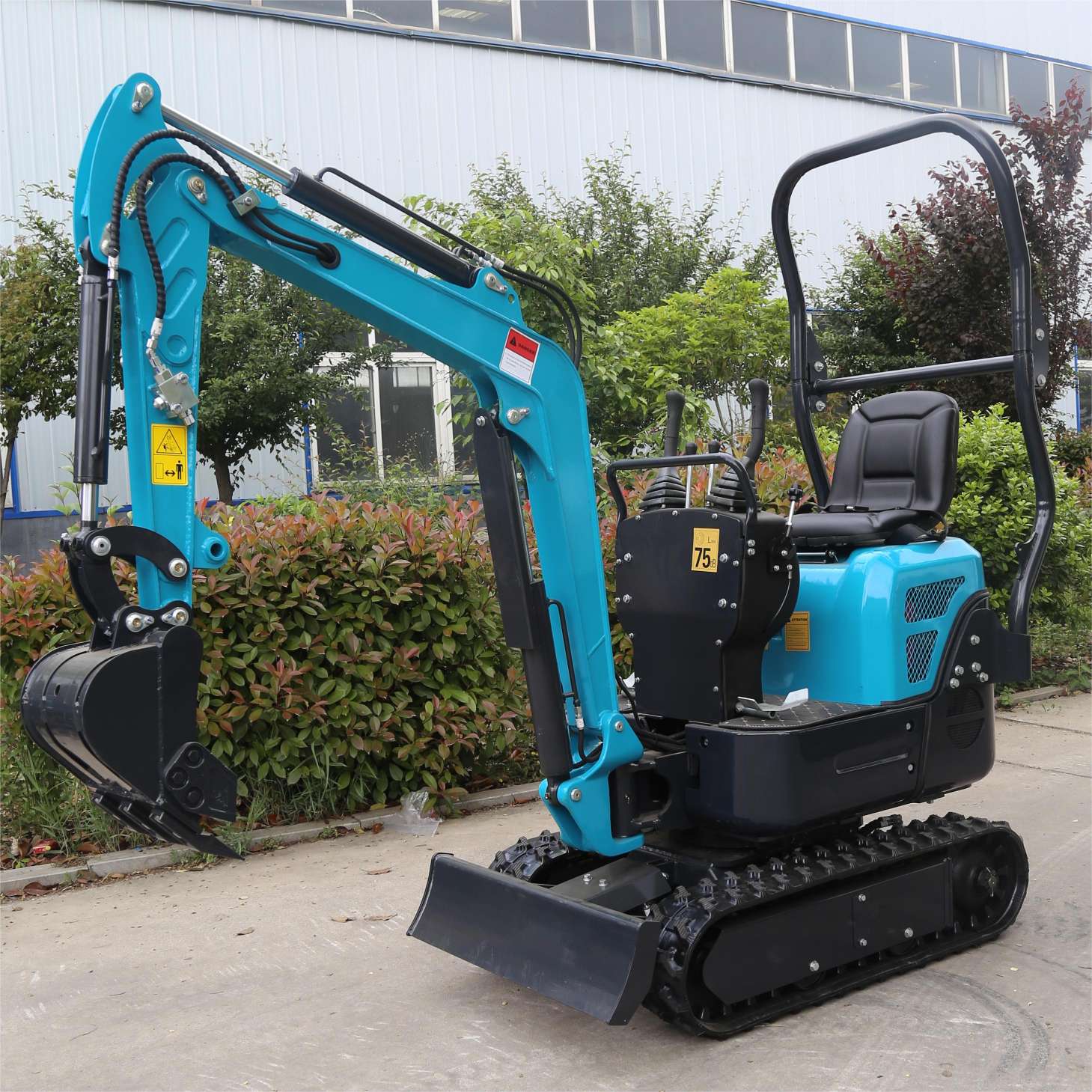
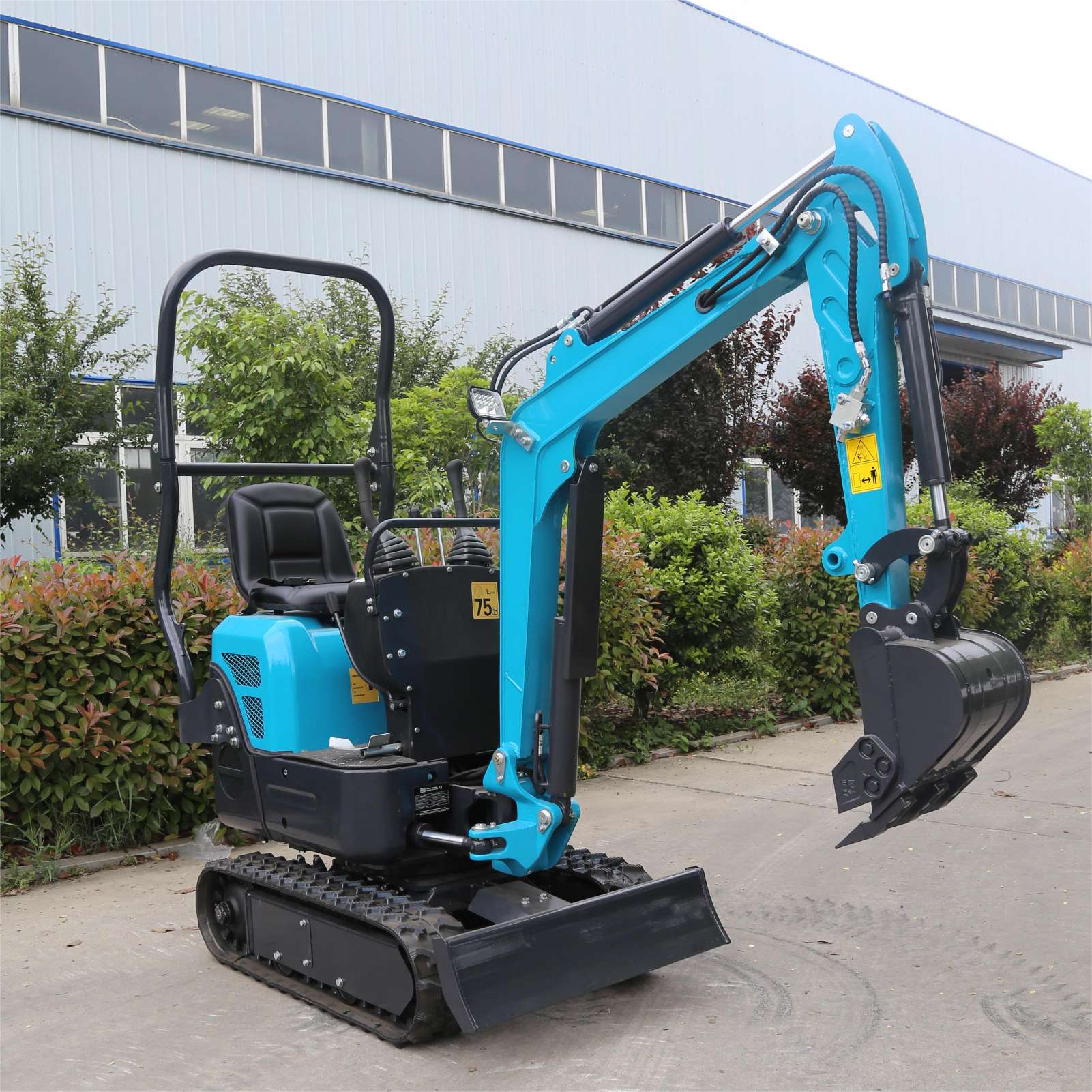
Boom swing — sometimes listed as boom offset, upper arm lateral swing, or side tilt depending on the manufacturer — describes how far the digging arm can swing left and right relative to the machine's centerline while the carrier remains stationary. On compact 1-ton class mini excavators, this typically ranges from 50° to 80° per side, with some models reaching 90° on one or both sides. The 1-ton upper-arm lateral swing mini excavator models in Nuote Machinery's excavator line are specifically designed for this confined-space use case, with lateral swing geometry that allows close-quarters trench face work without requiring full mini excavator repositioning.
Here is a specification check that every mini excavator buyer should perform but frequently does not: verify whether the listed boom swing angle is measured from the machine centerline or from the neutral forward-facing position of the boom. On some mini excavator specification sheets, the stated 75° swing is a total arc — meaning 37.5° each side — not 75° per side. This distinction matters enormously for workable clearance calculations, and the two measurement conventions appear in different mini excavator manufacturers' documentation without consistent labeling.
The working relationship between boom swing and zero-tail swing can be summarized practically for any mini excavator evaluation: ZTS determines whether you can position the machine; boom swing determines whether you can reach the work face once positioned. Both parameters must clear your site envelope. Confirming one without the other is half a mini excavator selection checklist.
Step 4: Map Your Work Scenario to the Right Swing Combination
Different job types place different demands on these two mini excavator parameters. Use the following scenario matrix as a quick reference when matching mini excavator specifications to your work type:
| Work Scenario | ZTS Priority | Boom Swing Priority | Minimum Boom Swing Recommended |
|---|---|---|---|
| Urban utility trench (curb-to-curb under 3m) | Critical | High | 70° per side |
| Foundation edge work (within 300mm of boundary) | High | Critical | 80° per side |
| Indoor demolition or basement excavation | Critical | Critical | 80° per side |
| Landscaping and drainage (open suburban lot) | Moderate | Moderate | 50° per side |
| Pipeline repair in established right-of-way | High | High | 70° per side |
Looking back at common mini excavator procurement errors, the single most frequent one I observe is selecting a mini excavator for the landscaping scenario and then deploying it on a utility trench job six months later without re-evaluating the swing parameters. Work scope changes after purchase are the second most common driver of mini excavator parameter mismatch, right after initial mini excavator mis-specification. In most cases, it is worth matching your mini excavator to your most demanding anticipated work scenario, not your average scenario.
Step 5: Cross-Check the Mini Excavator Specification Sheet Line by Line
With your site clearance envelope defined and your scenario matrix mapped, the actual mini excavator cross-check is straightforward — provided the specification sheet is complete. Reputable mini excavator manufacturers will list the following in the dimensional and performance sections of any compact mini excavator for sale:
- Overall machine width (transport width, tracks retracted if applicable)
- Tail swing radius (rear overhang during 360° slew)
- Boom offset range left / boom offset range right (in degrees)
- Minimum working radius at maximum boom swing
- Overall machine length (transport, with bucket stowed)
If any of these five lines are missing from a mini excavator specification sheet, request them explicitly before advancing the supplier to shortlist. A mini excavator manufacturer that cannot provide confirmed dimensional data on request is signaling a documentation quality gap that will affect every subsequent technical question through the procurement and support lifecycle.
From an engineering standpoint, the key factor is not just whether the numbers are present but whether they are measured under consistent reference conditions. Ask for the reference ground condition and mini excavator configuration used for the tail swing measurement. If the mini excavator spec was measured on a flat, hard surface but your site is graded or uneven, account for the difference when calculating clearance.
Step 6: Verify Mini Excavator Hydraulic Performance Under Load at Full Swing
Swing parameters are the primary checklist focus for confined-space mini excavator applications, but they do not operate independently from the hydraulic system performance. On 1-ton compact mini excavators with upper arm lateral swing, the hydraulic circuit must maintain consistent pilot pressure and flow across the full boom swing arc. Mini excavator models where hydraulic performance degrades measurably at the far end of the boom swing range — a condition that appears in field evaluations more often than specification sheets suggest — effectively deliver less than their stated swing angle under real load.
The energy-saving design in Nuote's 1-ton lateral swing mini excavator models targets this issue by optimizing the hydraulic circuit for stable pressure delivery across the full swing arc, not just at the centerline position. This matters for digging efficiency alongside walls: the bucket needs to cut cleanly at the far swing position, not just position there. When evaluating any mini excavator, request cycle time and digging force data at maximum boom swing, not only at the neutral centerline position, to surface this performance variable before mini excavator purchase.
It is difficult to give a single performance number for any mini excavator at full swing — it really depends on the specific pump sizing, circuit design, and loading intensity. But asking for the data point at all separates mini excavator buyers who know what to measure from those who discover the gap mid-project.
Step 7: Finalize Mini Excavator Selection Against the Complete Checklist
Once you have completed the six preceding steps and have a clear site clearance envelope, scenario mapping, and specification cross-check, the final step is confirming which mini excavator from your shortlist clears every line of the checklist. When evaluating a mini excavator for sale, do not advance to price negotiation until all seven checklist steps are verified. The 1-ton compact mini excavator models available through Nuote Machinery's excavator product line are configured with upper arm lateral swing and energy-saving hydraulic systems specifically suited to the urban and confined-space scenarios this mini excavator checklist targets.
Key specifications to confirm before finalizing your mini excavator for sale selection:
- Tail swing radius ≤ track width + site clearance buffer
- Boom swing angle ≥ minimum required angle from scenario matrix
- Hydraulic performance confirmed at maximum boom swing (not only at centerline)
- Machine transport width clears all access route bottlenecks
- Specification sheet provides all five dimensional data lines
A mini excavator that clears all five lines of this final check will not produce rework from parameter mismatch on the job types this checklist addresses. A mini excavator that clears only three or four lines will carry risk that typically surfaces in the first week of site deployment.
Three Mini Excavator Mismatch Patterns That Generate Rework — and How the Checklist Prevents Each
Selecting a compact mini excavator without checking these parameters does not typically produce immediate, visible problems. The rework pattern tends to appear incrementally: extra mini excavator repositioning moves per day, narrower productive windows per trench section, operators developing workarounds that reduce efficiency and increase component wear. Three commonly observed mini excavator mismatch patterns:
- ZTS radius not checked against slew diameter: Machine arrives on site, first 360° slew hits a wall or parked equipment. Operator works in partial-arc mode. Daily cycle count drops significantly. Fix: Step 2 cross-check performed before purchase.
- Boom swing angle inadequate for trench wall proximity: Machine can dig the trench center but cannot reach within 400mm of the wall face. Edge cleanup requires hand digging or machine repositioning every section. Fix: Step 3 evaluation and Step 4 scenario matrix match performed before purchase.
- Spec sheet measurement convention misread: Buyer reads "75° boom swing" as 75° per side; actual machine delivers 37.5° per side. Fix: Step 3 verification of measurement reference convention before acceptance.
For mini excavator buyers evaluating multiple models or sourcing from Nuote Machinery's compact excavator range, the specification sheets include all required dimensional parameters and boom swing measurements referenced from the machine centerline. The 1-ton mini excavator class with upper arm lateral swing is available in blue energy-saving configuration and can be verified against the full mini excavator checklist before order confirmation.
Summary: The Seven-Step Mini Excavator Selection Checklist
- Define your mini excavator site clearance envelope (slew diameter, wall clearance, passage width)
- Verify mini excavator zero-tail swing radius against available slew diameter
- Confirm mini excavator boom swing angle range and measurement convention (per side vs. total arc)
- Map work scenario to required mini excavator swing combination using scenario matrix
- Cross-check mini excavator specification sheet for all five dimensional data lines
- Verify mini excavator hydraulic performance at maximum boom swing position
- Confirm all five final mini excavator purchase-check lines cleared before committing
This process adds less than one hour to a mini excavator procurement decision that will govern months of site operations. For compact mini excavator purchases where the machine will work in confined urban environments, that hour is among the most productive time spent in the entire mini excavator procurement cycle. Contact Nuote Machinery to request the complete dimensional specification sheet for the 1-ton upper arm lateral swing mini excavator and verify your site parameters against it before finalizing your mini excavator selection.